


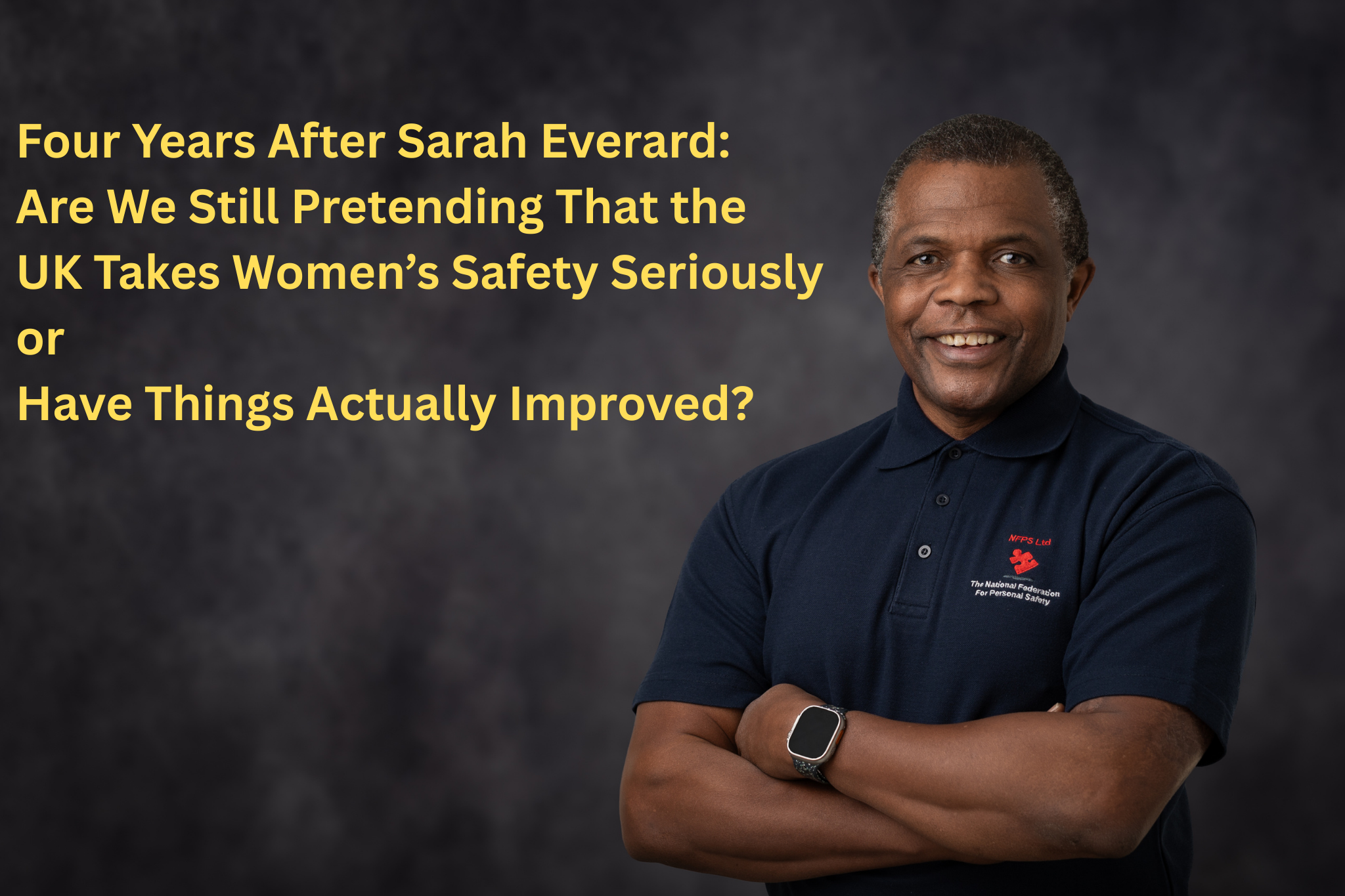
Four years have passed since the murder of Sarah Everard, a tragedy that should have reshaped the UK’s approach to women’s safety.
At the time, leaders promised transformation, stronger safeguarding and a cultural shift across policing and public protection.
Yet ask women today whether they feel safer walking home at night and the answer remains painfully familiar.
So we must confront the uncomfortable question: “have we genuinely improved women’s safety, or are we still pretending that we have?”
On 3 March 2021, 33-year-old Sarah Everard was abducted by off-duty Police officer Wayne Couzens, who misused his warrant card and handcuffs to falsely arrest her as she walked home.
He drove her to Kent, attacked her, murdered her and attempted to destroy the evidence.
The brutality of the crime was matched only by the betrayal of trust.
It exposed systemic weaknesses, flawed vetting, ignored warning signs and cultural issues that were neither isolated nor new.
The Angiolini Inquiry laid bare these failures, revealing fragmented standards, inconsistent oversight and a lack of decisive action.
But four years later, the deeper question is: what has really changed?
Strategic Lessons Still Unlearnt
Leadership across public protection must accept that culture drives behaviour.
Predatory conduct must be identified early, challenged immediately and escalated properly.
Without strong leadership and clear ethical standards, structural reforms alone cannot protect the public.
Operational Lessons Still Outstanding
While policing plays a key role, responsibility for public safety does not sit with police forces alone.
Forces still vary in capability, but they rely heavily on regional partners, safeguarding boards, local authorities, health services, education providers, and community organisations to create a connected and protective system.
Vetting and information-sharing challenges persist – not only within policing but also across national and strategic partners such as the Home Office, HMICFRS, NPCC, and local safeguarding boards – where inconsistent oversight and limited cross-agency accountability have allowed gaps to remain.
No single agency can address violence against women and girls; effective safeguarding relies on shared ownership, aligned standards, and consistent multi-agency practice.
Preventative work is strongest when partners engage fully.
Local authorities can improve street lighting, CCTV coverage and planning enforcement.
Health and education sectors can provide early intervention, trauma-informed support and safer disclosure routes.
Employers can strengthen lone-working procedures, risk assessments and staff competence.
And individuals, while never to blame for the actions of offenders, can still take proactive steps to enhance their personal safety.
Not because they should have to, but because greater awareness empowers people to reduce risk.
This might include:
- Planning routes and using well-lit or busier areas.
- Using personal safety apps or check-in systems.
- Trusting instincts and avoiding situations that feel unsafe.
- Learning basic conflict-avoidance and de-escalation strategies.
- Knowing how and where to access help quickly.
Women’s safety remains a societal responsibility, not a policing one.
Until all organisations, agencies and communities accept shared accountability, progress will remain inconsistent.
What do you think?
I welcome your thoughts.
NFPS Ltd specialises in helping organisations build safer systems of work, stronger professional standards and greater confidence in preventing and managing challenging or violent behaviours.
We help organisations close the gaps that lead to failures; gaps in competence, communication, culture and accountability.
If you or your organisation wants to strengthen its safety culture, improve staff competence, and meet its legal and moral responsibilities, contact NFPS Ltd today – https://nfps.info/contact-nfps/
Effective safety is never achieved through promises, it’s improved through training, leadership and decisive action.
Who Is Trevel Henry?
Trevel Henry is the Director of NFPS Ltd and one of the UK’s leading specialists in conflict management, physical intervention and workplace violence prevention.
With a career spanning over three decades, including service as an Expert Witness since 2001 and a Training Consultant since 1994, Trevel has supported organisations across education, health, social care, and security in improving their competence, culture and compliance.
His expertise lies in risk assessment, operational effectiveness and incident analysis.
Trevel’s work prioritises reducing the need for the use of restraint, embedding early-intervention practices and ensuring staff are trained, equipped and confident in their roles and responsibilities.He brings real-world insight to every organisation he works with, shaped by years of practical experience and involvement in some of the UK’s most complex workplace safety cases.
When Trevel speaks on safety, accountability, and culture, he speaks from deep knowledge and a lifelong commitment towards preventing harm.
#WomensSafety #SafetyLeadership #NFPS #MondayMotivation