


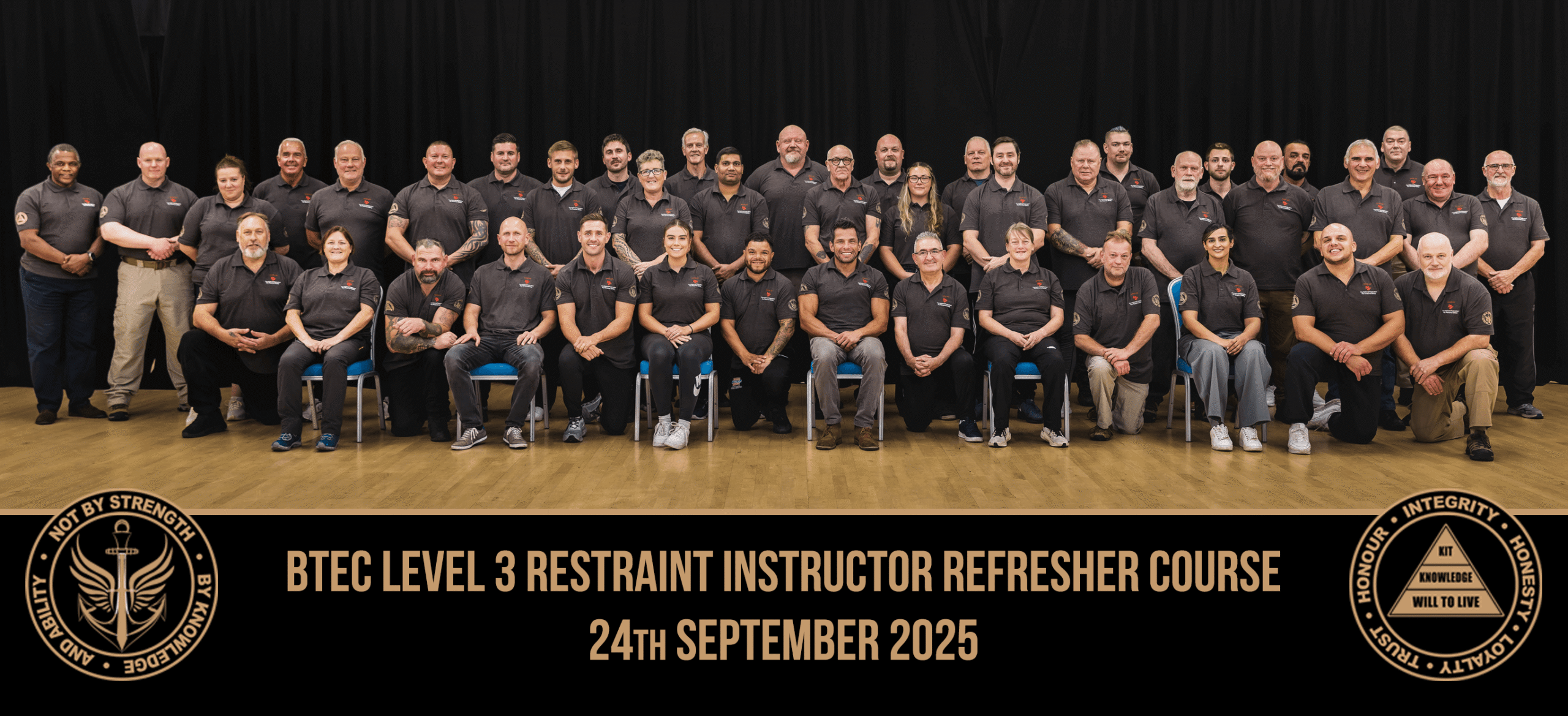
Because we understand what is at stake.
NFPS programmes enable you to:
- Gain recognised BTEC vocational qualifications
- Deliver legally defensible training
- Access complete professional training resources
- Join a respected national instructor network
- Maintain competence and professional credibility
Next month, March, NFPS Ltd is delivering its full instructor qualification programme at the prestigious Lilleshall National Sports & Conference Centre.
These programmes provide recognised BTEC vocational qualifications, complete training resources, and ongoing professional support.
The programme includes the following Initial Instructor courses:
NFPS Ligature Management & Room Search Course
9th March 2026
From identifying ligature points and implementing strategies to reducing the risk of self-harm, along with the importance of post incident documentation.
Book here: https://nfps.info/ligature-train-the-trainer-refresher-course/
BTEC Level 3 Physical Restraint Instructor Award (Residential)
23rd–27th March 2026
Our flagship 5-day residential programme.
Includes accommodation and catering.
You leave fully qualified to deliver and evidence professional, defensible training.
Book here: https://nfps.info/physical-intervention-trainer-course/
BTEC Level 3 Self-Defence Instructor Award
14th–15th March 2026
Develop the competence and credibility to deliver structured self-defence training professionally.
Book here: https://nfps.info/self-defence-trainer-training-2/
BTEC Level 3 Conflict Management Trainer Award
24th March 2026
Enable organisations to reduce risk through recognised conflict management training.
Book here: https://nfps.info/btec-level-3-conflict-management-trainer/
BTEC Level 3 Handcuff Instructor Award
11th, 12th or 13th March 2026
Qualify to deliver lawful and defensible handcuff training.
Book here: https://nfps.info/btec-level-3-handcuff-trainer-award-courses/
Also included as part of the programme are the following Instructor Refresher courses
Physical Restraint and Handcuff Refresher
11th, 12th or 13th March 2026
Book here: https://nfps.info/restraint-instructor-refresher-courses/
Self-Defence Instructor Refresher
15th March 2026
Book here: https://nfps.info/restraint-instructor-refresher-courses/
For many, these qualifications do more than certify competence.
They redefine professional identity.
They transform careers.
And they protect organisations.
The Question Every Organisation Must Answer
If you are delivering training or responsible for those who do there is one question that matters:
Can you evidence competence?
Not assume it.
Not believe it.
Evidence it.
Because when scrutiny comes, competence is not judged by intention.
It is judged by standard.
NFPS Ltd exists to define that standard.
To support professionals.
To protect organisations.
And to ensure training is not just delivered —
But defensible.
If your professional responsibility includes training others, now is the time to review your standing and secure your qualification using the course links provided above.
The Illusion of Qualification Is One of the Greatest Risks in Workplace Safety
Across the UK, thousands of trainers are delivering conflict management, physical intervention, self-defence and use-of-force programmes every single day.
Many are experienced.
Many are confident.
Many are trusted.
But from a legal, regulatory, and evidential perspective, confidence and experience alone are meaningless.
The law does not recognise confidence.
It recognises competence.
Under the Health and Safety at Work etc. Act 1974, employers have a statutory duty to provide information, instruction, training and supervision to ensure, so far as is reasonably practicable, the health, safety, and welfare of their employees.
This is reinforced by the Management of Health and Safety at Work Regulations 1999, which requires training to be appropriate, relevant and delivered by competent persons.
This is not an administrative requirement.
It is a legal safeguard.
Importantly, for those reviewing their professional standing, the specific NFPS Ltd instructor qualification course titles, with direct booking links, are published within this article (see above).
These provide a clear pathway to achieving and maintaining recognised vocational competence aligned with professional and legal expectations.
When incidents occur and they do, investigators do not ask whether the trainer was popular, experienced, or well-intentioned.
They ask:
- Was the trainer competent?
- Was the training aligned to recognised standards?
- Was the qualification valid, current and appropriate?
- Could the organisation evidence that competence?
This is where exposure begins.
At NFPS Ltd, our role is not to simply describe risk.
Our role is to interpret it.
And the reality is clear:
Training delivered without recognised vocational competence creates organisational vulnerability.
Competence Is the Difference Between Protection and Liability
Every organisation that provides personal safety or intervention training makes a critical decision.
They decide who is competent to teach others.
This decision carries legal weight.
Because training is not simply an operational function.
It is a control measure.
When training is inadequate, poorly structured, or delivered by individuals without recognised competence, the consequences extend far beyond the classroom.
They affect:
Legal liability
In civil claims, one of the first disclosure requests is the trainer’s qualification, competence and training records.
If competence cannot be demonstrated, the organisation’s defence weakens immediately.
Criminal scrutiny
Under the Corporate Manslaughter and Corporate Homicide Act 2007, failures in training and competence can form part of the causal chain leading to prosecution.
Training is not peripheral.
It is central.
Staff safety
Staff rely on training to make decisions in unpredictable, high-risk environments.
If that training is flawed, their safety is compromised.
Leadership accountability
Senior leaders carry responsibility for ensuring training is adequate and defensible.
Delegation does not remove accountability.
It transfers operational delivery.
Responsibility remains.
This is not theoretical.
It is operational reality.
Competence is not a certificate.
It is an evidential standard.
What Competent, Defensible Training Actually Looks Like
Competence is not defined by attendance.
It is defined by capability.
It requires trainers who can:
- Deliver structured, evidence-based learning
- Assess competence objectively
- Justify their decisions professionally
- Align training with legal and professional standards
- Evidence their qualification, currency and authority to train
This is why vocational instructor qualifications exist.
They create defensibility.
They create consistency.
They create protection.
At NFPS Ltd, our programmes are designed to establish this standard.
They are not simply courses.
They are professional qualification pathways aligned with operational reality and legal expectation.
They ensure instructors can do more than deliver training.
They ensure instructors can defend it.
Improving Safety | Enhancing Services | Empowering People