
There are moments in frontline practice where an organisation’s policies, training, equipment, leadership and legal understanding are tested in seconds.
A person is in crisis. A ligature risk is present. Staff must act. Decisions must be made quickly, often under pressure, often in emotionally charged circumstances, and often before senior managers, clinicians, security leads or external responders are immediately available.
Those decisions may involve prevention, observation, room search, removal of hazards, physical intervention, emergency response, preservation of dignity, preservation of life, post-incident reporting and later scrutiny.
In that moment, good intention is not enough. It is not enough for staff to care. It is not enough for a policy to exist. It is not enough for equipment to have been purchased. It is not enough for a search process to be assumed. It is not enough for an organisation to hope that staff will “do the right thing” when the right thing may be legally, clinically, ethically and operationally complex.
The harder question is this:
“Can the organisation evidence that its staff were trained, competent, equipped, supervised and able to act within a lawful, proportionate and professionally accountable framework?”
That question sits at the heart of the NFPS Level 3 Ligature Management & Room Search Trainer Course.
This course has been developed for organisations that need more than awareness. It has been developed for those who require competence, internal training capacity, lawful intervention, defensible room search practice, meaningful governance and practical readiness across real operational settings.
The human reality cannot be ignored
Ligature risk is not an abstract compliance issue. It is a human issue first.
Every ligature incident involves a person in distress, crisis or acute vulnerability. It also affects the staff who respond, the managers who oversee systems, the families who may later ask what happened, and the organisations required to explain what was known, what was done and why.
The statistics make the issue impossible to dismiss.
In England and Wales, hanging, strangulation and suffocation remained the most common method of suicide in 2024, accounting for 56.6% of all suicides, or 3,504 deaths.
In Scotland, there were 704 probable suicide deaths in 2024, and official reporting continues to identify hanging, strangulation and suffocation as the most common method of probable suicide.
In custodial settings, the Scottish Government has reported that over 90% of probable suicide deaths in prison custody from 2012 to 2013 through to 2023 to 2024 had an underlying cause of intentional self-harm by hanging, strangulation and suffocation.
In mental health settings, the National Confidential Inquiry into Suicide and Safety in Mental Health has highlighted the continuing relevance of ligatures and ligature points in ward-based deaths, including the use of low-lying ligature points in a substantial proportion of inpatient deaths by hanging or strangulation among patients under 25.
These figures should not be read coldly. They represent lives lost, staff traumatised, families devastated and organisations left to examine whether more could reasonably have been done.
That is why ligature management cannot be treated as a narrow technical topic. It is a safety, governance, legal and human responsibility.
The risk is cross-sector
Although ligature risk is often associated with mental health services, it is not confined to mental health wards.
It can arise wherever vulnerable, distressed, detained, intoxicated, impulsive, traumatised, suicidal, self-harming or acutely unwell people may be present.
This includes:
Acute hospitals and emergency departments;
Mental health units and assessment areas;
Healthcare security and violence reduction teams;
Police custody and detention environments;
Prisons and secure accommodation;
Residential care and supported housing;
Education and specialist settings;
Youth justice and secure transport;
Local authority and commissioned services;
Temporary accommodation and frontline community environments.
The NFPS resource manual underpinning this course was developed for application across UK frontline sectors and expressly addresses police, healthcare, education, justice, residential care, supported housing, emergency departments, secure transport and temporary accommodation. It also incorporates leadership and governance responsibilities, training expectations, audit tools, equipment checks and room-based search protocols.
The breadth of application matters because the same fundamental question arises in each setting:
Could this risk have been foreseen, and if so, was the organisation ready?
The consequences of weak systems are real
The legal and regulatory consequences of inadequate ligature risk management are not theoretical.
In 2021, Essex Partnership University NHS Foundation Trust was fined £1.5 million following a Health and Safety Executive prosecution arising from safety failings connected with the deaths of 11 patients. The prosecution concerned failures to manage recognised environmental risks, including potential fixed ligature points.
In Scotland, the Health and Safety Executive served an enforcement notice on NHS Orkney concerning ligature risks in a mental health transfer room. The notice identified multiple fixings capable of being used as ligature points and stated that the risk to patients at risk of self-harm or suicide had not been reduced as low as reasonably practicable.
The lesson is stark.
Organisations are not judged merely by whether a policy existed. They are judged by whether foreseeable risks were identified, whether reasonable controls were implemented, whether staff were competent, whether equipment and systems were reliable, whether searches were lawful and effective, whether incidents were documented, and whether leadership had meaningful oversight.
A policy without training is fragile.
Training without governance is incomplete.
Equipment without competence is unreliable.
Room search without lawful authority is exposed.
Incident response without documentation is difficult to defend.
Ligature management is a governance issue
The direction of travel is clear: organisations are increasingly expected to evidence robust ligature risk assessment, lawful and defensible search procedures, competent staff response, reliable equipment systems and meaningful post-incident governance.
This is not a matter for frontline staff alone.
Senior managers, health and safety leads, clinical leaders, security managers, safeguarding leads, educators, commissioners, care providers, custody leaders and governance teams all have a stake in whether ligature risk is properly understood and managed.
A credible ligature management system must be able to address several interlocking questions, including:
Prevention: have foreseeable ligature risks and environmental hazards been identified, assessed, reduced and reviewed?
Authority: do staff understand when they may intervene, search, remove items, restrict access, use physical intervention or escalate concerns?
Competence: have sufficient staff been trained to act safely and lawfully, not merely briefed in general terms?
Readiness: are equipment, procedures, communication routes, supervision and escalation arrangements reliable in practice?
Assurance: can the organisation evidence audit, training, incident review, post-incident learning and leadership oversight?
The NFPS manual reflects this governance reality through its inclusion of environmental audits, staff training logs, incident reporting, weekly cutter checks, inspection readiness tools, staff competency matrices, policy assurance tools and leadership oversight mechanisms.
That is the difference between having a document and having a system.
Room search must be lawful, effective and systematic
Room search is often underestimated.
It is sometimes viewed as a practical task, a security function or a common-sense check. Where ligature risk, self-harm risk or concealed hazards are foreseeable, room search becomes a safety-critical and legally sensitive function.
A poor search may miss the item that later causes harm.
An unlawful or poorly justified search may expose staff and organisations to complaint, challenge or litigation.
A search that is not recorded may become difficult to evidence.
A search process that is not trained may be applied inconsistently across teams, shifts and settings.
The NFPS approach treats environmental search as a structured process requiring clarity of purpose, lawful authority, method, documentation and escalation. The manual describes an effective search as one that is safe, thorough, systematic and effective, and identifies room and environmental search as a key preventative measure in reducing risk associated with ligature points and ligatures.
That is why room search is not treated as an add-on to this course. It is integral to competent ligature risk management.
Why Level 3 train-the-trainer matters
Many organisations do not simply need one or two individuals to attend an external course.
They need internal capacity.
They need enough trained staff across relevant settings, roles and shifts. They need local trainers who can cascade competent practice, support refresher training, maintain standards and help ensure that organisational competence is not dependent on a small number of isolated individuals.
That is the purpose of a Level 3 train-the-trainer model.
Properly implemented, it allows organisations to build a sustainable internal training capability. It supports governance, reduces repeated reliance on external delivery and gives managers a more coherent basis for evidencing staff competence over time.
In practical terms, the aim is not simply to produce a nominated person who can respond to a ligature event. The aim is to help organisations ensure that sufficient staff are trained to recognise risk, act safely, intervene lawfully, search appropriately, document properly and respond with competence when time, pressure and vulnerability intersect.
That distinction matters.
It is the difference between attendance and capability.
What the NFPS Level 3 course is designed to achieve
The NFPS Level 3 Ligature Management & Room Search Trainer Course is designed for competent trainers, managers, security leads, health and safety professionals, healthcare practitioners, operational managers, safeguarding leads, educators and others who may be required to support or deliver training in ligature risk management and room search.
The course is built around the following practical outcomes:
Operational competence: understanding ligature risk, environmental hazards, immediate action principles, room search methodology and post-incident requirements.
Legal and professional defensibility: understanding lawful authority, duty of care, capacity, consent, intervention principles, documentation and governance.
Internal training capability: enabling suitable delegates to support local training, refreshers, policy implementation, audit readiness and organisational assurance.
The course is practical and scenario-based, supported by realistic training methods and familiarisation with the equipment and resources relevant to safe intervention and environmental search. The purpose is not merely to show delegates what equipment exists, but to embed its use within a wider system of access, checking, competence, maintenance, documentation and governance.
Delivered by operational experts
The course is delivered by Jim Snipe and Gary Ross, whose combined operational experience gives the course its practical authority.
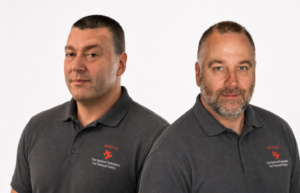
Jim brings extensive experience across healthcare, mental health, learning disability, acute, secure and former prison service settings, with particular expertise in ligature response, ligature removal and the practical management of vulnerable people in high-risk environments.
Gary brings substantial NHS violence reduction and security experience, together with military police and search expertise, and has been central to the development of the room search, lawful authority and legally robust operational components of this course.
This matters because ligature management and room search cannot be taught properly from theory alone. The subject requires an understanding of what staff are actually required to do when a person is in crisis, when a search must be justified, when risk changes quickly, and when the actions taken may later be examined by managers, investigators, inspectors, families, solicitors or a court.
NFPS’s course materials also identify trainer outcomes including understanding ligature risks and removal protocols, assessing environments for ligature points and anchor hazards, delivering in-house awareness training, and supporting policy development within the delegate’s own setting.
Why choose NFPS?
NFPS has been an established authority in use of force, conflict management, physical intervention, restraint, PMVA, violence reduction and safety-critical operational training for over 30 years.
That experience matters.
Ligature management and room search do not sit in isolation from the wider realities of frontline practice. They engage the same core questions NFPS has worked with for decades: when staff may lawfully intervene, how physical intervention is justified, how risk is assessed, how vulnerable people are protected, how staff are trained, how decisions are documented, and how organisations evidence that their systems were competent, proportionate and fit for purpose.
The NFPS Level 3 Ligature Management & Room Search Trainer Course is therefore a natural extension of NFPS’s wider work in lawful intervention, personal safety, restraint, healthcare risk, security practice and operational competence.
It is for organisations that want to move beyond assumption and towards evidence.
Beyond isolated awareness and towards internal competence.
Beyond policy and towards practice.
Beyond reaction and towards readiness.
Direct staff training is also available
For some organisations, the immediate need may be direct staff training (level 2) rather than a train-the-trainer (level 3) model.
NFPS can deliver level 2 training for staff who require practical competence in ligature management and room search within their own operational setting.
NFPS can also discuss wider Level 3 train-the-trainer provision, including conflict management, physical intervention, mechanical restraint, self-defence and breakaway.
The principle is consistent across all NFPS delivery: training must be fit for purpose, legally informed, operationally realistic and capable of supporting safer outcomes.
The question every organisation should ask
Ligature management is not only about emergency response.
It is about prevention, preparedness, lawful intervention and organisational assurance.
It is about ensuring that staff are not left to improvise in the most difficult seconds of their working life.
It is about ensuring that managers are not relying on assumptions about competence.
It is about ensuring that environmental search is lawful, systematic and recorded.
It is about ensuring that vulnerable people are protected with dignity, urgency and skill.
It is about ensuring that when an organisation is later asked:
“What did you do to manage this foreseeable risk?”
The answer is coherent, evidenced and professionally defensible.
The question is not whether ligature risk exists.
The question is whether your organisation can evidence that it is prepared.
Register your interest
NFPS Level 3 Ligature Management & Room Search Train-the-Trainer courses, for organisations wishing to develop internal training capacity; and NFPS Level 2 delivery, for organisations requiring direct staff training.
To discuss the most appropriate option for your organisation, or to register interest in future course dates, please contact me directly: [email protected]
Website: www.nfps.info
Course page: www.nfps.info/ligature-train-the-trainer-course/
References
Health and Safety Executive (2022) Enforcement Notices Public: NHS Orkney, mental health transfer room ligature risks. Available at: HSE Enforcement Notices Public.
HM Courts & Tribunals Judiciary (2021) R v Essex Partnership University NHS Foundation Trust: Sentencing remarks of the Hon. Mr Justice Cavanagh, Chelmsford Crown Court, 16 June 2021. Available at: Judiciary of England and Wales.
Landells, R. (2026) Ligature Management & Room Search Resource Manual 2026. Version 3.1. Third edition. NFPS Ltd. Contributors: Snipe, J., Ross, G. and Henry, T.
National Confidential Inquiry into Suicide and Safety in Mental Health (2024) Annual Report 2024: UK patient and general population data. Manchester: University of Manchester. Available at: NCISH/HQIP.
National Federation for Personal Safety (2026) NFPS Ligature Management & Room Search Trainer Course: Web page extract. NFPS Ltd.
National Records of Scotland (2025) Probable Suicides, 2024. Edinburgh: National Records of Scotland. Available at: National Records of Scotland.
Office for National Statistics (2025) Suicides in England and Wales: 1981 to 2024 registrations. Newport: Office for National Statistics. Available at: Office for National Statistics.
Scottish Government (2026) Deaths in Prison Custody 2012-13 to 2023-24: Cause of death in prison custody. Edinburgh: Scottish Government. Available at: Scottish Government.
The Guardian (2021) NHS mental health trust fined £1.5m over care failures that led to 11 deaths. 16 June. Available at: The Guardian. Accessed: 5 May 2026.