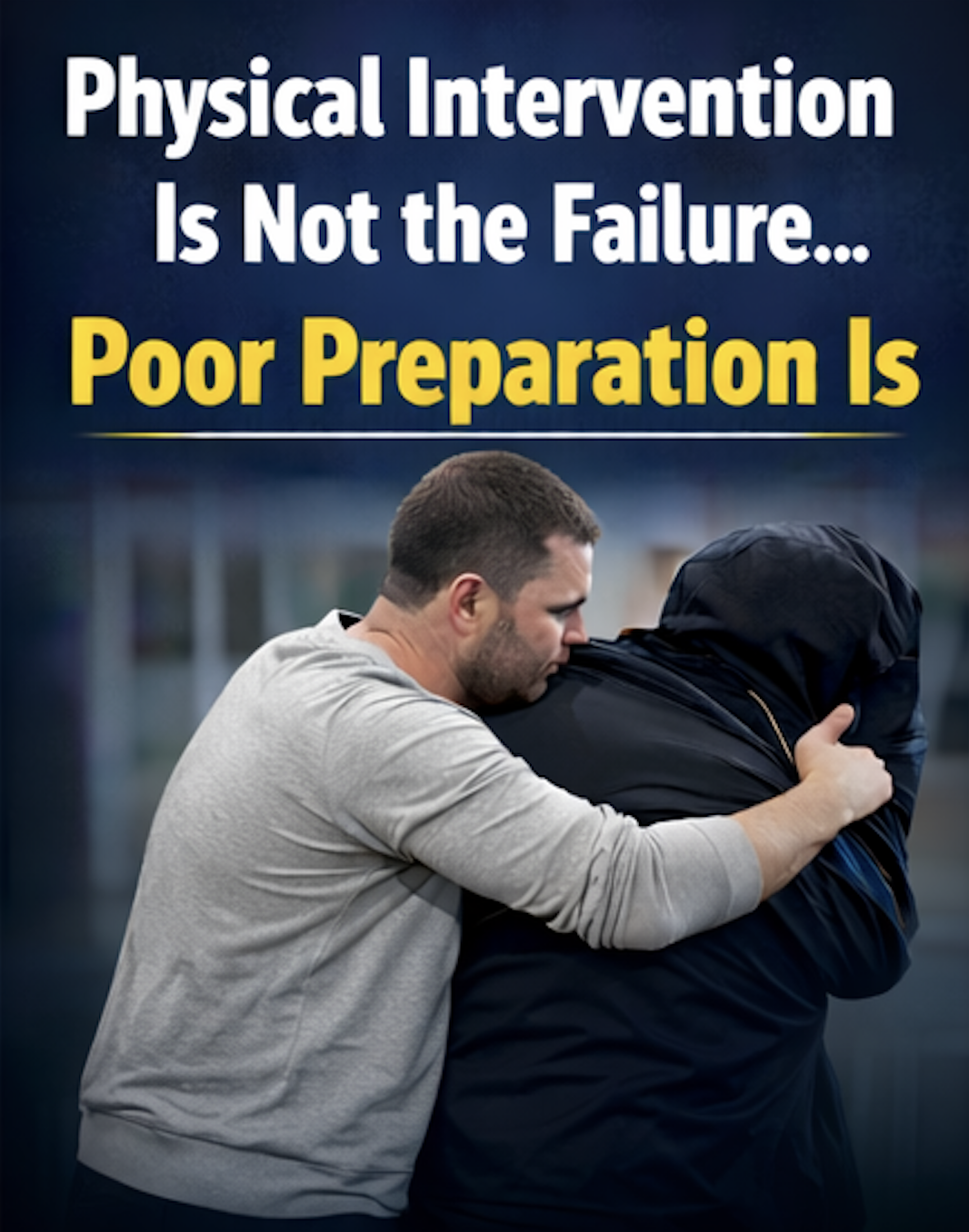
Physical Intervention Is Not the Failure — Poor Preparation Is

The problem is not physical intervention. The problem is what organisations fail to put in place before intervention becomes necessary. When an incident escalates to restraint, too many settings treat the intervention itself as the “failure point.” The reality is that failure often occurs much earlier, at the level of leadership responsibility, operational planning, training standards, behavioural risk management, and … Read more

From the Training Room to the Courtroom: How NFPS Training Secured a Not Guilty Verdict

What if the training you deliver today could one day save someone from a criminal conviction? This is not a hypothetical question. It’s a reality we recently witnessed when a former delegate walked free from Crown Court, armed not with a legal team’s strategy, but with the understanding and confidence gained from an NFPS self-defence course nearly a decade earlier. … Read more

Negligence Dressed Up as Compliance

Negligence Dressed Up as Compliance

Over time, workplace policies have shifted. What once served as practical guidance has now become rigid rulebooks that often prioritise compliance over care. Policies have strayed far from their original purpose to support wellbeing, lawful practice and ethical decision-making. One of the most alarming examples of this is the widespread misapplication of the so-called ‘no-touch’ policy. Standing By While Children … Read more

Conflict Resolution Training: A Week in the Life at NFPS Ltd

NFPS Ltd expert leading conflict resolution training session

Last week reminded me why we are so passionate about our work at NFPS Ltd. Every day, we strengthen standards in conflict resolution training and physical intervention, especially for professionals in schools, healthcare, and care settings. Preparing for Expert Witness Work I spent part of the week preparing for a court case where I will act as an Expert Witness … Read more

It is wrong to assume that a singular, static document could ever adequately risk assess physical restraint techniques. Here is why…

Risk Assessing Physical Restraint Techniques cannot be suitably and sufficiently achieved by means of a static document. This image invites the viewer to read the associated article which provides evidence to the above proclamation.

We at NFPS have recently received requests for ‘risk assessments’ of our advanced restraint techniques. Interestingly, it is something we have rarely been asked for historically, and for good reasons, as shall be revealed within this article. The requests have originated from those delivering training within Health and Social Care and is being largely driven by the Client of the NFPS … Read more

Attack ‘Not Outside the Workplace Norm’

Your eyes are not deceiving you – you read this correctly…see the link below! Question – I would appreciate it if you could let me know when being victimised is part of the workplace norm? An appeals court denied a bus driver’s workers’ compensation claim saying the PTSD she developed from an attack was “not outside” of a normal workday … Read more

Understanding Reasonable Force Course

The NFPS Understanding Reasonable Force course addresses a significant knowledge gap in the industry. This course is an essential resource for people tasked with training, managing or investigating staff who may use physical force. Who is This Course For? Many individuals in these roles lack formal training or qualifications in the nuanced area of reasonable force. This course provides a … Read more

Your Home is Your Castle

Understand your legal rights to protect yourself and your property. As the early nights have arrived, we think more about our safety. The saying “my home is my castle” comes from the principle that individuals have the right to feel safe and secure in their homes. But what does this mean in practical and legal terms? In the UK, if … Read more

6 Essential Steps to Effectively Manage Risk

Violence in the workplace or other settings, whether between individuals or involving enforcement officers and civilians, can escalate quickly if not managed effectively. Understanding how to identify, avoid, prevent, and control potential violent situations through thorough risk assessments is crucial towards creating safer environments. The prevalence of violence and aggression across various sectors remains high 90% of teachers reported witnessing … Read more

Know Your Rights and Responsibilities

Personal safety is a concern for many individuals. Although no one expects to find themselves in a situation where they ‘must’ defend themselves, understanding the legal framework around self-defence is essential. In the UK, self-defence is designed to balance the right to protect oneself with the need to avoid unnecessary violence. It is vitally important to familiarise yourself with the … Read more