
Firstly, thank you to all of you who have left comments and shared our videos this week. It has resulted in some great feedback that has been very welcome.
physical restraint
The Safety Pod as a Least Intrusive Option
In my last video ‘How Restraint Equipment Can Reduce Risk’ I spoke about using restraint equipment as a least intrusive option, and if you haven’t seen that video you can watch it here – https://nfps.info/how-restraint-equipment-can-reduce-risk-video/
Today I have Pal with me from UK Pods Ltd, and I’ve hijacked him to talk about the Safety Pod to give all of you a better understanding of this exceptional piece of equipment and how it can help you reduce the need for prolonged restraint, especially on the floor in prone and supine as well as helping you reduce risk, costs and your overall liability.
How Restraint Equipment Can Reduce Risk [Video]
We all know that one factor in the risk of someone dying from positional asphyxia is restraint going on for an extended period of time.
This video is based on a discussion I have had with someone who is very concerned about a particular service user and also their colleagues who are possibly at risk of serious injury and possibly worse.
Always Have a Strategy

“Always have a strategy and stick to it” – Ray Arcel Ray Arcel was an American boxing trainer who was active from the 1920s through the 1980s who trained 20 world champions. When training Roberto Duran he told Duran: “There’s technique and there’s strategy. Technique is your every move, your every punch. It covers all of your short-term decisions. Strategy … Read more
Why Situational Awareness Fails
Why Situational Awareness Fails “Situational awareness” is the term used to describe the capacity of an individual or a team to keep track of the multiple factors that together impinge on safety. An example of this can be found in personal safety/self-defence training courses where individuals are taught to become more aware of their environment and what is going on … Read more
September 2018 BTEC Level 3 Restraint Instructor Award Course Graduates
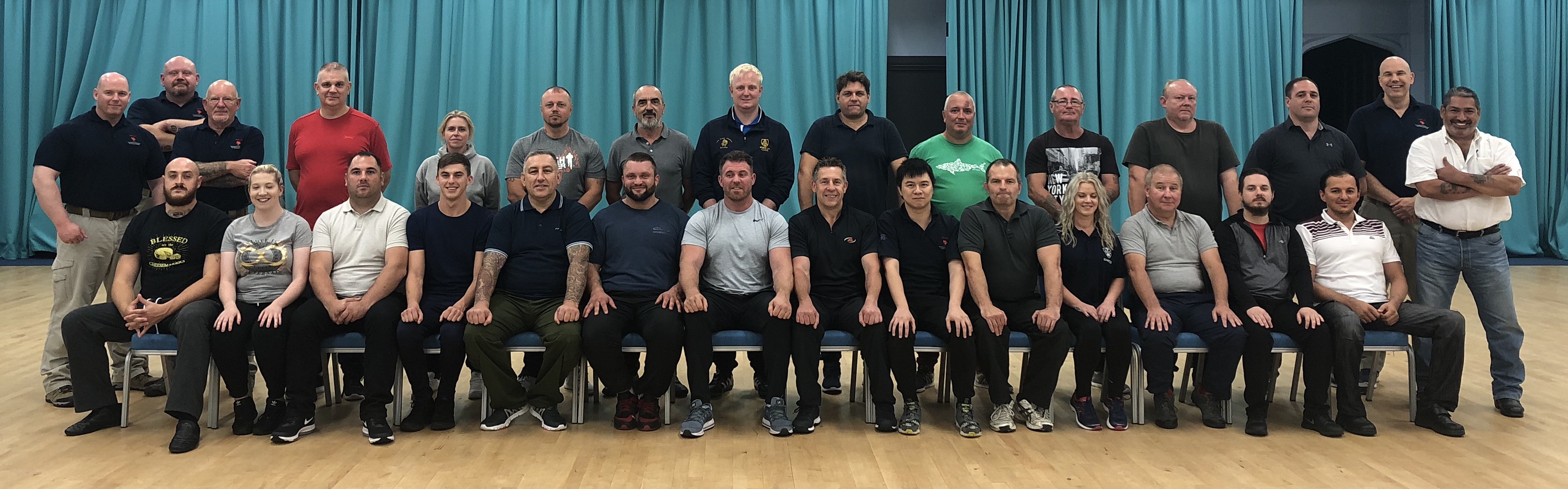
Well done to everyone who attended the NFPS BTEC Level 3 Restraint Instructor Award Course this week and congratulations to all of the following who successfully completed the course: Mostapha Alfaour John Barton Jessica Bowerman Tyson Bradley Joanne Buckley Matthew Cheyne Jenkin Chu Terence Cross Russell Davies Charles Garner Alexander Good Dene Hale Stephen Kerr Tony Koleszar Craig Lewis Jock … Read more
Strategic Blindness, Situational Awareness, Dr Hadiza Bawa-Garba and Physical Skills Training [Podcast]
Strategic Blindness, Situational Awareness, Dr Hadiza Bawa-Garba and Physical Skills Training, follows on from the podcast I did yesterday, entitled ‘Complicating the Uncomplicated’ and today I want to follow on from that with this podcast entitled ‘Strategic Blindness, Situational Awareness, Dr Hadiza Bawa-Garba and Physical Skills Training’, because it adds more weight to the argument that teaching physical skills in … Read more
Complicating The Uncomplicated [Podcast]
![Complicating the Uncomplicated [Podcast]](https://nfps.info/wp-content/uploads/2018/08/Complicating-the-Uncomplicated-Podcast.png)
Complicating the Uncomplicated [Podcast] Today in many physical restraint/physical intervention and disengagement/breakaway systems, many techniques are taught in a way that seems designed to ‘complicate the uncomplicated’. And what I mean by that is a system of teaching is employed that breaks the technique down into each component part which is then taught within a complex system of instruction making … Read more